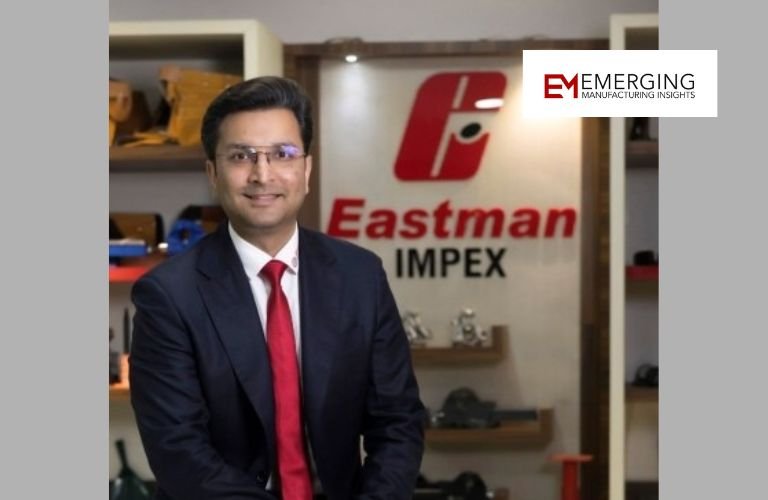
… by Gaurav Singal, CEO, Eastman IMPEX
For decades, competitiveness in manufacturing was measured by three factors quality, cost, and delivery. Today, a fourth pillar has emerged that is rapidly reshaping global trade: sustainability. Environmental performance is no longer just a corporate responsibility initiative; it has become a decisive business parameter that influences market access, customer trust, investment decisions, and long-term profitability.
This shift is particularly significant with the implementation of the European Union’s Carbon Border Adjustment Mechanism (CBAM), a landmark policy designed to place a carbon price on imports entering the EU. While initially applicable to sectors such as iron and steel, aluminium, cement, fertilisers, hydrogen, and electricity, CBAM is expected to expand over time, impacting broader manufacturing value chains.
For Indian manufacturers, CBAM should not be viewed merely as another regulatory hurdle. Instead, it represents a strategic inflection point one that encourages businesses to modernise operations, embrace cleaner technologies, and build globally competitive manufacturing ecosystems. Those who respond proactively will not only safeguard exports but also strengthen their position in an increasingly sustainability-driven global economy.
Understanding CBAM Beyond Compliance
The Carbon Border Adjustment Mechanism is fundamentally designed to ensure that imported products are subject to carbon costs comparable to those faced by European manufacturers under the EU Emissions Trading System. Its objective is to prevent “carbon leakage,” where production shifts to countries with less stringent environmental regulations.
For exporters, this means that environmental transparency is becoming just as important as product quality. Businesses will increasingly need to demonstrate the carbon footprint associated with manufacturing processes, energy consumption, and supply chains.
The implications extend far beyond documentation. Companies lacking reliable emissions data or sustainability reporting frameworks may face increased compliance costs, delayed shipments, or reduced competitiveness in international markets.
More importantly, CBAM signals a broader global trend. Countries across the world are gradually integrating environmental performance into trade policies. Manufacturers that begin preparing today will be better positioned for tomorrow’s evolving regulatory landscape.
Sustainability is No Longer a Cost Centre
A common misconception among manufacturers is that sustainability inevitably leads to higher operational costs. In reality, many sustainability initiatives deliver measurable financial returns through greater efficiency and resource optimisation.
Energy-efficient equipment, renewable energy integration, process optimisation, waste reduction, water conservation, and circular manufacturing practices often reduce operational expenses while improving environmental performance.
Similarly, digital technologies such as IoT-enabled monitoring systems, smart energy management, predictive maintenance, and AI-driven production optimisation enable manufacturers to reduce energy consumption and minimise emissions without compromising productivity.
The most successful manufacturers increasingly view sustainability not as an expense but as an investment that strengthens operational resilience and long-term competitiveness.
Supply Chains Are Becoming Carbon Conscious
Manufacturing competitiveness today extends beyond factory walls. Global buyers increasingly assess the environmental performance of their entire supplier ecosystem before making sourcing decisions.
Large multinational corporations have established ambitious net-zero commitments, making supplier sustainability an essential procurement criterion. Indian manufacturers supplying components, raw materials, or finished products are therefore expected to demonstrate responsible sourcing, emissions reporting, and environmental accountability.
This evolution is transforming supplier relationships.
Instead of evaluating vendors solely on pricing and delivery capabilities, procurement teams are now considering carbon emissions, renewable energy usage, recycling initiatives, waste management practices, and ESG disclosures.
Manufacturers that can provide credible sustainability data are likely to gain stronger customer relationships, preferred supplier status, and access to premium global markets.
Data Will Become the New Competitive Advantage
One of CBAM’s most significant implications is the growing importance of accurate emissions measurement.
Historically, manufacturers focused on production metrics such as output, yield, quality, and efficiency. Going forward, carbon accounting will become equally important.
Businesses will require systems capable of measuring:
- Energy consumption across production facilities
- Direct and indirect greenhouse gas emissions
- Material-level carbon footprints
- Renewable energy utilisation
- Waste generation and recycling efficiency
- Supply chain emissions
Without reliable data, organisations will struggle to meet international reporting requirements or respond effectively to customer sustainability audits.
Digitalisation therefore becomes a critical enabler of sustainability. Companies investing early in measurement, reporting, and verification capabilities will gain a substantial competitive advantage.
Innovation Will Define Manufacturing Leadership
The CBAM era encourages manufacturers to rethink traditional production models.
Innovation is no longer confined to product development; it now includes cleaner manufacturing processes, resource-efficient technologies, alternative materials, and low-carbon production systems.
Indian manufacturers possess significant strengths in engineering, process optimisation, and cost-efficient production. By combining these capabilities with sustainability-led innovation, businesses can develop differentiated products that meet the evolving expectations of global markets.
Green manufacturing also opens opportunities for developing high-value products that command stronger customer preference due to their lower environmental impact.
Rather than reacting to regulatory changes, forward-looking companies are embedding sustainability into research, design, procurement, production, logistics, and product lifecycle management.
Financing is Increasingly Linked to Sustainability
Investors, banks, and financial institutions are placing greater emphasis on environmental, social, and governance (ESG) performance when evaluating businesses.
Companies demonstrating measurable sustainability improvements often benefit from:
- Improved access to capital
- Lower financing costs
- Enhanced investor confidence
- Better corporate governance ratings
- Increased long-term business valuation
As sustainability disclosures become standard across industries, manufacturers with strong environmental performance are likely to enjoy greater financial flexibility compared to peers that delay adaptation.
This makes sustainability not only an operational priority but also a strategic financial consideration.
Building Future-Ready Manufacturing Ecosystems
India has set ambitious goals around clean energy, energy efficiency, and sustainable industrial development. Government initiatives promoting renewable energy adoption, green hydrogen, electric mobility, circular economy practices, and cleaner manufacturing technologies are creating an enabling environment for industrial transformation.
Manufacturers that align with these national priorities will be better equipped to compete internationally while contributing to India’s vision of becoming a global manufacturing powerhouse.
Preparing for the CBAM era requires a structured approach rather than isolated sustainability initiatives. Businesses should focus on several strategic priorities:
First, establish robust carbon accounting systems capable of generating credible emissions data.
Second, improve energy efficiency through process optimisation and technology upgrades.
Third, increase renewable energy adoption wherever operationally feasible.
Fourth, engage suppliers in sustainability initiatives to improve environmental performance across the value chain.
Fifth, integrate sustainability into long-term business strategy rather than treating it as a compliance exercise.
Such measures enhance resilience not only against CBAM but also against future environmental regulations that are likely to emerge across global markets.
From Compliance to Competitive Advantage
History shows that every major regulatory shift creates two groups of businesses those that adapt early and gain market leadership, and those that respond only after regulations become mandatory.
CBAM presents a similar opportunity.
Manufacturers that begin investing in sustainability today will be better positioned to reduce future compliance costs, strengthen customer confidence, improve operational efficiency, and access premium international markets.
More importantly, sustainability enables businesses to build stronger brands, attract responsible investors, engage environmentally conscious customers, and create long-term value for all stakeholders.
The transition may require investment, organisational commitment, and technological upgrades, but the long-term benefits extend well beyond regulatory compliance.
Conclusion
The global manufacturing landscape is undergoing one of its most significant transformations in decades. Environmental performance is rapidly becoming an essential determinant of competitiveness, influencing everything from procurement decisions and trade policies to investment flows and customer preferences.
For Indian manufacturers, the Carbon Border Adjustment Mechanism should not be perceived as a barrier to exports but as a catalyst for modernisation. It provides an opportunity to accelerate digital transformation, improve operational efficiency, embrace cleaner technologies, and build globally respected manufacturing brands.
Businesses that treat sustainability as a core business strategy rather than a compliance obligation will be better positioned to thrive in an increasingly carbon-conscious global economy.
The future of manufacturing will belong not only to those who produce efficiently but also to those who produce responsibly. For Indian industry, the CBAM era marks the beginning of a new chapter where sustainability and competitiveness will go hand in hand, shaping the next generation of global manufacturing leadership.