Sayeed Ahmed, CEO, Biesse India Email Interaction with Emerging Manufacturing
1. How does manufacturing precision machinery for developed international markets test India’s engineering and manufacturing capabilities, and what does it take for Indian manufacturers to compete globally?
It tests Indian manufacturers on multiple grounds. First is regarding tolerance and reliability. Unlike consumer goods or standard structural components, capital equipment operates under continuous, dynamic operational stress. Achieving micron-level geometric tolerances, dynamic balancing, thermal stability, and vibration dampening requires advanced metrology, climate-controlled assembly lines, and repeatable machining standards.
Second is regulation and compliance-related. Exporting to mature markets requires strict adherence to international safety, electrical, and environmental directives, including the European Machinery Directive, CE marking, UL standards, and electromagnetic compatibility (EMC) regulations. Compliance must be engineered into machine architecture from day one and can’t come after operations have begun.
Third is a zero tolerance mindset for down time. In developed markets, capital equipment sits inside highly automated, high-throughput value chains. Equipment failure leads to hourly downtime costs. Hence, mean time between failures (MTBF) and component reliability must match the benchmark of traditional precision powerhouses in Germany, Italy, and Japan.
It prepares Indian manufacturers to shift from cost arbitrage to value engineering. Competing cannot rely on low labour costs alone; it requires superior Total Cost of Ownership (TCO), Design capabilities and Energy-efficient systems. It also prepares manufacturers for process repeatability and automation. Transitioning from manual, to, automated guided vehicles, robotic cell integration, and digital shopfloor tracking, implementation of AI based applications for enhancing efficiency and effectiveness in processes. It enforces a culture of quality to get it right the first time, enforcing root-cause error-proofing (Poka-Yoke) across both mechanical fabrication and mechatronic wiring.
2. What does Biesse’s manufacturing journey in Bengaluru tell us about India’s readiness to become a global manufacturing hub for high-value capital equipment?
Biesse’s footprint in Bengaluru is proof that manufacturers can progress from a localized assembly setup to a full-fledged global ‘design-to-production’ set up for wood, glass, and composite material processing machinery, offering a definitive proof of concept for India’s capital goods sector.
It shows an evolution from “Made in India for India” to “Engineered in India for the World”. Biesse proved that sophisticated CNC Routing, Edge-banding, and Panel-sizing machinery manufactured in Bengaluru can achieve full quality parity with machinery produced in Europe, Italy, while exporting a major share of output across the Americas, Europe, Asia-Pacific, and the Middle East.
While Bengaluru is internationally recognized for software and IT services, Biesse’s success capitalizes on the region’s precision-engineering belt, Supply Chain (aerospace, machine tools, automotive machining). This proves that India possesses the requisite ecosystem for manufacturing sophisticated machinery.
It also validates India as a China+1 ‘Capital Goods Alternative’. It demonstrates that multinational corporations (MNCs) can establish high-margin capital equipment operations in India capable of handling complex mechanical assemblies, proprietary firmware integration, and multi-market variant configurations.
3. How important are India’s supplier networks, engineering talent, quality systems and after-sales capabilities in enabling companies to manufacture and export complex industrial machinery to global markets?
Building capital machinery is an ecosystem sport because no OEM operates in a vacuum. Exporting high-end machines require specialised castings, precision gearboxes, ground ball screws, linear guides, and custom sheet metal fabrication. A competitive domestic tier-1 and tier-2 vendor base eliminates lead-time friction, mitigates foreign exchange volatility, and enables just-in-time (JIT) production.
It also requires mechatronic and embedded software talent. Modern capital equipment is fundamentally software-driven. India’s engineering advantage lies in the convergence of mechanical engineering with embedded software, PLC automation, and industrial IoT (e.g., predictive analytics, remote diagnostics).
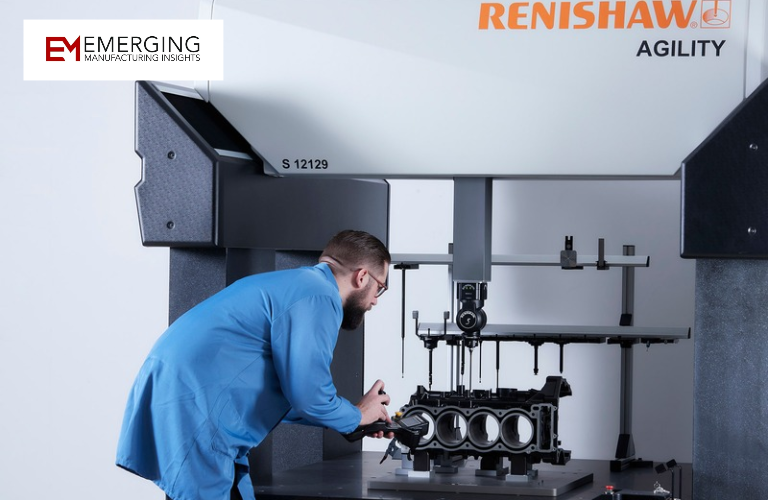
Stringent quality controls across incoming materials, coordinate measuring machines (CMM), laser interferometry for axis calibration, and multi-day dry-run stress tests ensure that machines arrive in global factories ready to plug-and-play without costly on-site recalibration.
Capital goods sales depend entirely on long-term lifecycle support. Remote diagnostics platforms, responsive global spare-part supply chains, and digitally connected field-service operations turn one-off machine sales into recurring high-margin relationships.
4. While Make in India has strengthened domestic manufacturing, how can India encourage more companies to develop and export complex, high-value industrial products rather than focus primarily on domestic demand?
While the Make in India initiative has successfully boosted domestic substitution in automotive, electronics assembly, and general engineering, pivoting the sector toward exporting complex, high-value capital goods requires deliberate structural measures:
- Expanding Export-Linked Capital Goods Incentives: Expand Production-Linked Incentive (PLI) frameworks beyond high-volume consumer goods to specifically cover precision machine tools, advanced robotics, and specialised material processing equipment based on technological complexity and export realisation.
- Accelerating Trade Facilitation & Bilateral FTA Engagements: Concluding balanced Free Trade Agreements (such as the India-EU FTA and implementation of the India-EFTA TEPA) is crucial. Tariff reductions on Chapters 84 and 85, paired with mutual recognition agreements (MRAs) for CE certifications and conformity testing, will eliminate redundant compliance hurdles for Indian exporters.
- Incentivising R&D and Technology Transfer: Introduce weighted tax credits for indigenous industrial R&D, corporate-academic research partnerships in kinematics and material sciences, and co-development programs between global OEMs and Indian joint ventures.
- Duty Inversion Corrections: Rationalise customs duties on imported high-end critical sub-components (such as specialised linear scales, high-precision spindle bearings, and industrial controllers) that cannot yet be sourced domestically at scale, preventing tariff penalties on finished exported machines.
5. Drawing from Biesse’s experience in India, what are the key lessons for manufacturers and policymakers looking to build long-term manufacturing capabilities, strengthen global competitiveness and attract greater investment in advanced manufacturing?
For Manufacturers
Anchor Operations according to global quality standards. Avoid engineering separate domestic and export tiers of quality. Standardising all manufacturing to the most stringent international standards creates operational scale, simplifies supplier quality management, and builds global credibility.
Invest in deep supplier-vendor development. Build long-term technological partnerships with local Tier-2 and Tier-3 vendors. Transferring quality audits, metrology training, and Lean manufacturing disciplines to local suppliers pays dividends in component consistency and cost control.
Integrate hardware with smart services. Shift machine architecture toward digital ecosystems (smart sensors, cloud-based predictive maintenance, and IoT). Software and service capabilities elevate machines from commodity metal-cutting assets to smart industrial solutions.
For Policymakers
Foster specialised capital goods clusters. Indian needs to move beyond basic industrial parks, establish specialized advanced manufacturing corridors equipped with shared high-accuracy metrology labs, environmental testing chambers, heat-treatment facilities, and accredited certification agencies.
Upskill the workforce in precision mechatronics. Modernise technical training institutes (ITIs) and polytechnics to train technicians in multi-axis CNC programming, industrial robotics, precision assembly, and advanced metrology.
The industry also needs long-term policy and regulatory stability. Capital goods manufacturing requires heavy upfront capital investment and 5-to-10-year development cycles. Predictable taxation, clear export incentive roadmaps, and stable trade policies are paramount for attracting long-term foreign direct investment.